
Confirmed combo foundations
The June 2024 official gameplay overview describes dazzling combos and executions with simple inputs. It also establishes two main weapon slots and two Phantom Edge slots. That supports studying how equipment interacts, but does not provide an exact cancel chart.
This page explains how to evaluate a sequence. It does not claim a completed release-build move list. Use the combat overview for announced systems and the defensive practice guide for the response you want to fit around an attack.
Build a sequence you can explain
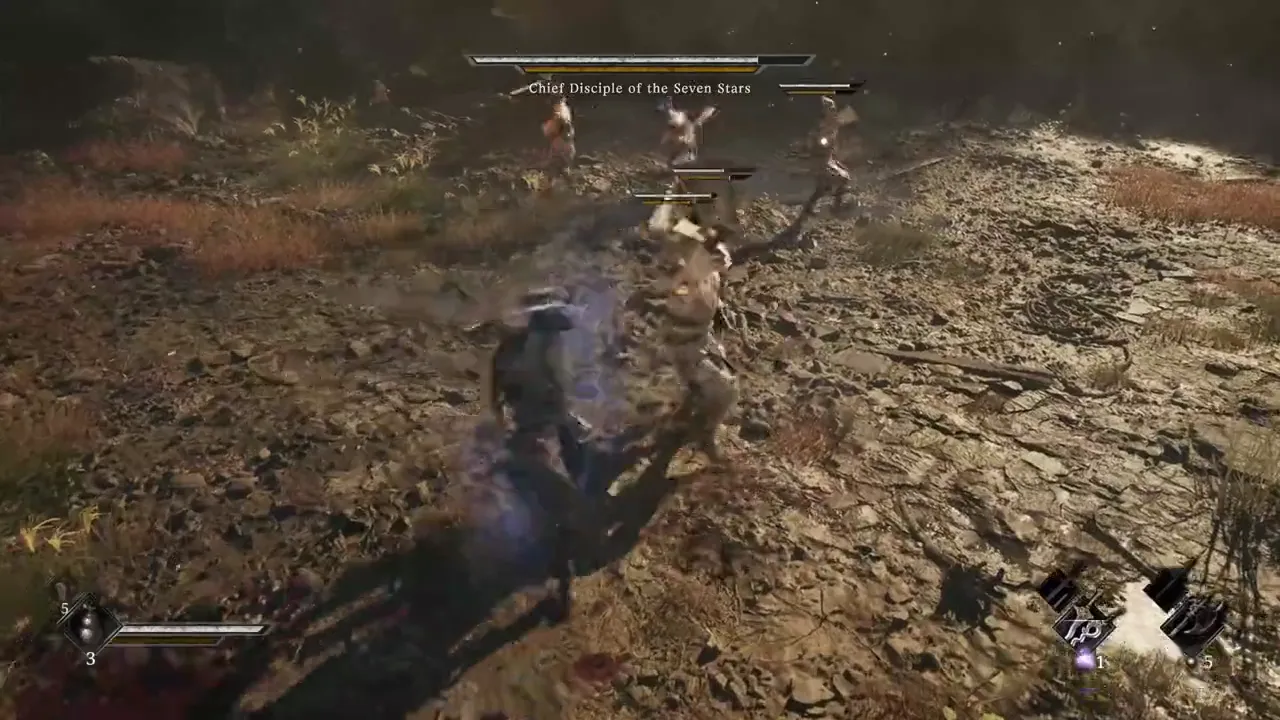
Start with a small number of commands using one weapon. Observe the starting distance, whether each action connects, and when Soul accepts the next command. Repeat the same sequence before adding anything else.
A combo that looks impressive in a trailer may depend on an enemy state, equipment, or demonstration setup that is not visible. Reproducing the appearance alone does not establish damage efficiency or universal safety.
| Test | Keep constant | Change |
|---|---|---|
| Basic chain | Weapon, target, distance | One additional attack input |
| Defensive exit | The established short chain | Timing of the tutorial's defensive command |
| Weapon transition | Starting weapon and sequence | One switch command |
| Secondary addition | Main weapon sequence | One Phantom Edge activation |
Write down the result before changing another variable. “The second command was accepted after the attack ended” and “the second command visibly interrupted the attack” are different observations.
Distinguish recovery, a transition, and a cancel
For study purposes, an attack can be described as preparation, contact, and follow-through. These are ordinary animation descriptions, not a published list of game-specific cancel stages.
Compare the unmodified action with the action followed by another command. If both return control at the same moment, the second input may simply be queued or occur after recovery. If the visible follow-through ends earlier, investigate whether a particular transition is responsible. A single clip still cannot establish the size of a buffer window.
Do not conclude that using a tool removes all risk from a heavy attack. A secondary action can have its own commitment, cost, or availability conditions. Our Phantom Edges overview lists the separate questions to check.
Evaluate the sequence in an encounter
Once the commands are repeatable, ask whether the target remains in reach and whether the sequence leaves time for the next enemy action. Record misses and interrupted attempts alongside successful ones. Showing only the successful take can hide how unreliable a proposed sequence is.
Compare one enemy first, then another, while retaining the same equipment. A sequence that works against a stationary target may be difficult to use in a coordinated group encounter.
The useful outcome is a short explanation of when you would choose this sequence, rather than an unsupported claim that it is optimal everywhere. Follow the tips checklist to diagnose distance, camera, and equipment changes before expanding a chain.
Sources
Sources checked October 11, 2026. Practice suggestions in this guide are editorial guidance, not release-build test results.